French Impressionism in 10 films
In the 1920s French directors used superimposition, slow motion and fast editing to show what characters feel, not only what they do. These ten films follow the movement from its first experiments to its last silent masterpieces.
- 1J'accuse 1919Abel Gance · IMDb 7.7Gance's First World War epic, shot partly with real soldiers on leave from the front, already uses fast editing and superimposition to carry emotion.
Next: El Dorado (1921)
Gance's epic of war gives way to L'Herbier's world of dancers and dreams, where the camera's distortions describe one woman's feelings. - 2El Dorado (1921) 1921Marcel L'Herbier · IMDb 7.0L'Herbier tells a melodrama of a Spanish dancer with blurred focus, distorted images and quick cuts, so the audience feels her state of mind.
Next: The Faithful Heart
The view moves from Spain to Marseille, and Epstein shifts the focus from one mind to the pulse of a whole fairground. - 3The Faithful Heart 1923Jean Epstein · IMDb 7.4Epstein sets a love triangle among Marseille's docks and fairgrounds. The fairground ride is cut at dizzying speed.
Next: The Smiling Madame Beudet
From the loud fairground we move to a quiet provincial living room, where Dulac turns the camera on a woman's private fantasies. - 4The Smiling Madame Beudet 1923Germaine Dulac · IMDb 6.6Dulac follows a bored provincial wife and shows her daydreams with distorted images. It is often called an early feminist film.
Next: La Roue
The same year brings Gance's grandest montage, trading Dulac's interior stillness for steam, speed and rhythm. - 5La Roue 1923Abel Gance · IMDb 7.4Gance's railway saga builds whole sequences from bursts of very short shots. Its rhythmic montage later impressed filmmakers in the Soviet Union.
Next: L'Inhumaine
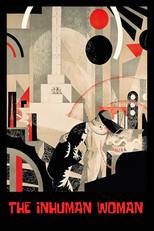
From Gance's machines we turn to L'Herbier's modern design, where architecture and painting join the cinema in a high-society story. - 6L'Inhumaine 1924Marcel L'Herbier · IMDb 7.2L'Herbier gathers painters, architects and designers, including Fernand Léger and Robert Mallet-Stevens, in a dazzling Art Deco spectacle.
Next: Entr'acte
After L'Inhumaine's polished set pieces, Clair turns the movement's tools into a joke, with rhythm and trick effects for their own sake. - 7Entr'acte 1924René Clair · IMDb 7.3Made to be shown between the acts of a Paris stage show, René Clair's short chases a runaway funeral cart through pure visual play.
Next: Napoléon
From a ten-minute joke we move to the biggest film of the era, where Gance uses the same tricks on a historical scale. - 8Napoléon 1927Abel Gance · IMDb 8.2Gance's huge portrait of the young Bonaparte uses hand-held shots, multiple exposures and a triple-screen finale. It is the movement's largest ambition.
Next: The Seashell and the Clergyman
The scale shrinks, and Dulac turns the movement's visual tools inward, toward dream, desire and the surreal. - 9The Seashell and the Clergyman 1928Germaine Dulac · IMDb 7.0Dulac films a script by Antonin Artaud as a chain of dreamlike images. The film moves from emotion toward the surreal.
Next: The Fall of the House of Usher
Epstein ends the guide where the dream becomes a nightmare, using the tools of the movement for horror just before sound arrives. - 10The Fall of the House of Usher 1928Jean Epstein · IMDb 7.2Epstein brings Poe's tale to life with slow motion, superimposition and a mood of dread. It closes the silent movement on its eeriest note.




Where next: the school page lists more films, and the Soviet Montage guide shows how filmmakers in the USSR pushed editing in a very different direction.
Learn more about French Impressionism →


